

How personal analytics actually helped me.
My adventures with tracking my life, and how it all comes down to beginning.

I got my first Apple Watch sometime in 2015, right after thinking that I never wanted an Apple Watch. It seemed like everything I didn’t like about technology (and still don’t). That constant connection and pull towards something that isn’t just the moment in front of you. The thing is, the watch was a gift, and like all free things, it can make it either easier or harder to put aside and ignore. In my case, I was deep into running at the time and running a LOT. Perhaps not in comparison to some runners, but for my life, it was a consistent minimum of 5 miles a day with varying intensity levels. What was the exact length of my runs, though, and how intense were they really? I thought it would be interesting to find out, so I put on the watch and went for a run. Immediately, I knew that the run I had been doing was about 4.85 miles and not 5, but if I ran this little extra leg, it would be that perfect 5! So I added that bit and felt a sense of satisfaction. The next step was to begin noticing my time and effort trends. I liked this because I run alone and only alone, so my competition is me against myself. The idea that I could beat my own time, through the obstacle course trail route I had designed for maximum joy and effort, was one I embraced immediately. It was easy and enjoyable for me to feel accomplished on a good day and learn from the days that were slower or harder. What had I eaten, how much sleep had I gotten, what was the weather, etc?
This was the first tech that I ever loved and the gateway to tracking things in my life, for the better. I know that for many people, this can go wildly astray, leading some to feel pulled into unhealthy territory. For me, with a mind that can feel like constantly crashing waves in all directions, it felt grounding. A tangible sense of accomplishment can be difficult to find in an ADHD brain. I had finally found something that gave it to me in the right way.
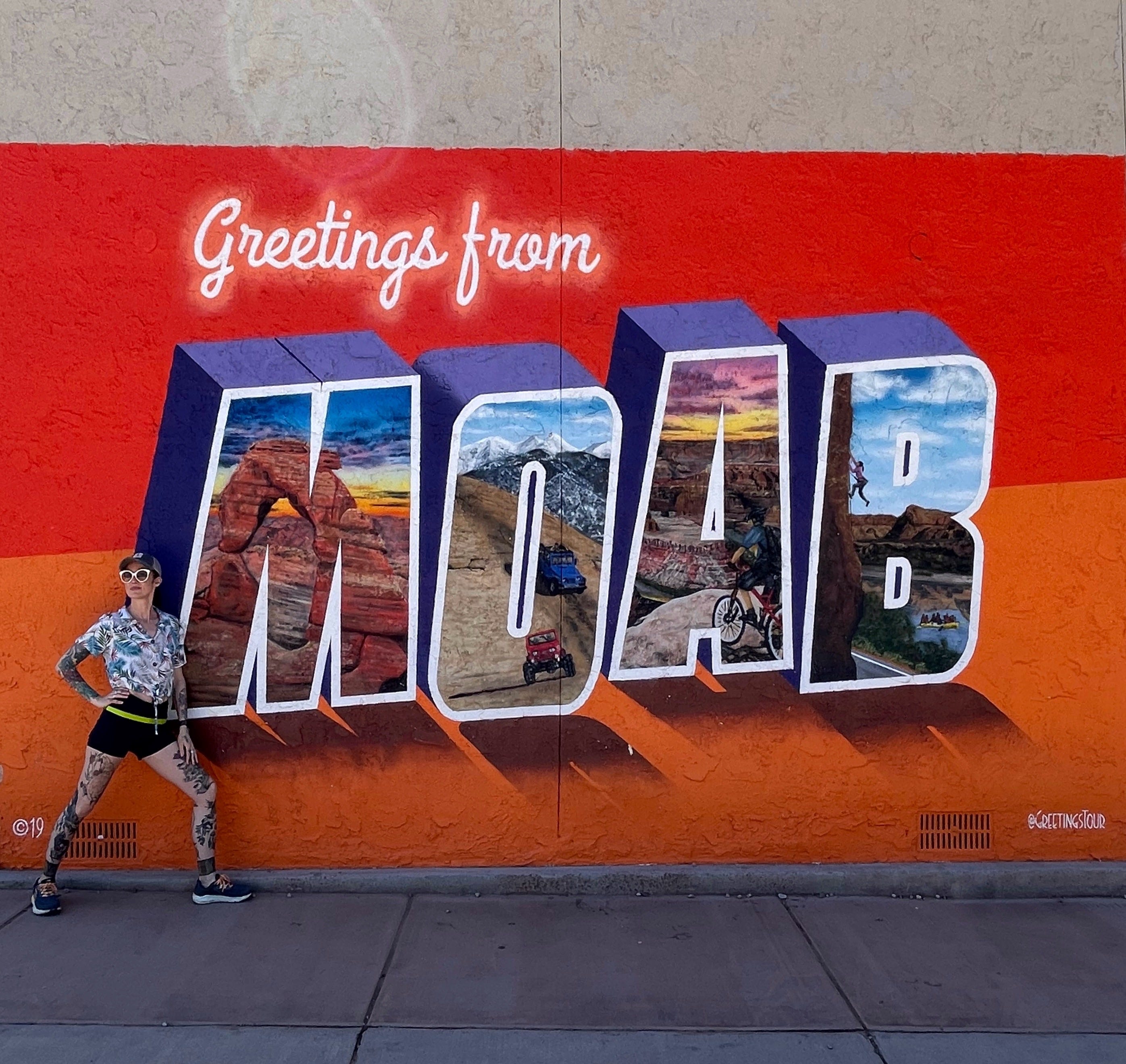
From Moab to Miami, I can tell you exactly how many miles I’ve walked, hiked or run… but that’s annoying, and you don’t need that information.
Since I started using my watch, I have added an Oura Ring (not sponsored), and that is pretty much the extent of the wearable tech I find helpful. I learned that if I go to sleep before 10 pm, I get enough deep/REM sleep to feel good waking up at 6 am. I know that if I have an ultra-active day, I need an extra hour of sleep at night to recover. This data led me to see exactly how even one alcoholic drink in the evening impacted my night of rest. My heart rate was higher, I got less deep sleep, and I could see on my Apple Watch that I wouldn’t push as hard the next day if I ran. Though I didn’t have an issue with drinking, I found that my post-40-year-old body did, so I dabbled with dry months to see how I would react. There were no downsides, but I always veered back slowly after the month was over and felt some regrets. Finally, after Thanksgiving weekend in 2023, I decided to go a year with zero drinking. Given my affinity for tracking, I downloaded the Reframe app and logged day after day. Friends and I joked about my green mug collection, the tiny icon you get when you go a day without alcohol in the app. Yet again, this appealed to how my brain works, and 365 days of little green mugs were collected before I knew it. I could dedicate an entire post to that particular decision in my life, because it impacted me more than I ever expected. Since clocking a year, I have had only a handful of nights with a few drinks, and all in some celebratory environment that felt worthwhile and completely controlled.
The last big thing I found myself tracking was my Spanish lessons. This sounds like another category of thing, but when I started, I did it for two reasons. One was because I really wanted to be able to assist some people ahead of me in line at the DMV who were having a hard time. They couldn’t find anyone to translate for them, and it seemed like just knowing some basics could have made their day a lot easier. The other reason was that it is good for your brain, and it was a way to track one more healthy habit and complete the circle I had set up. That was 775 days ago! A minimum of 15 minutes a day (though sometimes I’m on a roll and go for an hour), y entiendo algo de español y voy a Mexico este verano.
What is the point in telling you all of this? Not to get you to use more technology or to download another app. My point is, if there is something you think you want to do, start today. Don’t make a big fuss about it. Don’t start a YouTube channel or announce your life change on TikTok. Just begin, and if it helps you, track your progress. The speed at which you rack up the days, the knowledge, and the improved hours of life is fast. But if you don’t begin, the thing won’t happen. Go easy on yourself. If you want to run, start by walking 4 or 5 days a week. If you want to learn something new, dedicate 15 minutes a day. I’m now 46 years old, still running, getting good sleep, and know enough Spanish to be a little bit helpful next time someone is in need. There are thousands of ways in which the world pulls at your attention every day, these are my ways of pulling the attention back. Trust me, the experiments have all been worth it, and I don’t plan to stop.